The Aesculapian snake (Zamenis longissimus) is non-venomous. The species is from central and eastern Europe, but there are two small populations in Colwyn bay and London (United Kingdom).
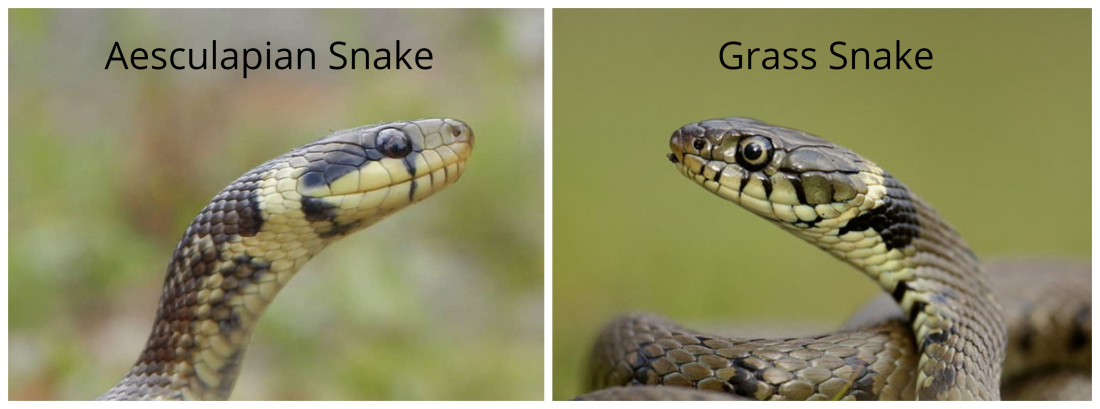
This species can hit a size of 2 meters with males being longer than females, this is because the male ‘dance’ for courting of the females. Females can lay up to 20 eggs, while juvenile Z. longissimus can look like grass snakes because of the yellow collar that both species share but adult Z. longissimus don’t have the collar.
About Tom Major
Tom Major is a first year PHD student who studied Zoology with Behaviour at Exeter University. He has helped on many studies on reptiles, which one includes studying the colour use in chameleon species.
The background of the chameleon tank would be a different colour, then looking at the mid-body colour to see how it changes. Model clay predators was used to see if the chameleon colour change was faster than when the animal was calm.
The study of Zamenis longissimus in Colwyn Bay
K. longissimus was found in Colwyn Bay in 1962 and is still a small population today. Tom would take the same lap around Colwyn Bay which included a veriety of habitats, such as; grassland, woodland, built up areas, etc. The snakes would be collected, brought back to the lab to be identified by being scanned for its length and put back where it was found.
This year Tom did 89 surveys and found 90 K. longissimus but only 63 individuals and 9 deceased. Out of those 63 individuals found, there were;
- 44 juveniles
- 4 sub-adults
- 15 adults
With a large number of juveniles found, this shows that the population is growing slowly. The down side to a small population is all the inbreeding that’s happening between them all and will eventually lead to some genetic disorders or issues.
My Opinions
Overall the project is interesting because the K. longissimus is the only introduced non-native species of snake in the UK, and by understanding this population it can be used to help understand other non-native snakes and they survive a new habitat. Only issue is how it could be affecting the native wildlife as this species of snake’s diet is; small birds, mice and possible reptiles.
This talk has interested me because of the ecological side and how they have assessed how the snake is not a danger to humans or its wildlife. Also, how this could be used to introduce other non-native species of wildlife into new habitats, like the K. longissimus.


 Herpetology with Emily Reed